A Cream Tea Road Trip: 8 Bakeries and Tea Rooms Worth the Detour in Cornwall
October 13, 2026 - Bakeries

October 11, 2026 - Reviews
October 10, 2026 - Recipes
October 08, 2026 - Recipes
Ask most people where the scone comes from and they picture a country house lawn, a three-tiered stand and a pot of Darjeeling. The truth is rougher, plainer and much older. Long before anyone spread clotted cream on one, the ancestors of the scone were flat rounds of oats and barley, mixed with water and a pinch of salt, patted out by hand and cooked on a hot iron plate over an open fire. No oven, no raising agent, no jam. Following that journey from hearth to tea table is not just a history lesson — every step left a mark on how scones are made today.
Scotland's soil and climate suited oats and barley far better than wheat, and for centuries wheat flour was a costly import. Everyday bread was therefore a flat cake of grain, water and salt, cooked quickly on a girdle — a flat iron plate, sometimes a stone, set over the fire or later on the stove. The bannock takes its name from the Gaelic bannach, and it could be made from oats, barley, pease or whatever was in the meal chest that week.
Oatcakes were rolled thin, cooked until the edges curled and the surface lost its raw sheen, then dried so they would keep. A round of bannock was commonly cut into farls — quarters, from the word "fourth" — which is why you still see soda farls in Ireland and farls sitting in Scottish bakery trays. These were not delicate things. They were sturdy, slightly chewy, designed to hold butter, cheese or a bit of smoked fish, and to survive a pocket on a long walk. If you bake oatcakes today, you are cooking in the oldest layer of this history.
The word "scone" turns up in Scottish writing by the early sixteenth century, and its origins are genuinely disputed. One theory traces it to the Dutch schoonbrood, meaning "clean bread"; another points to Middle Low German; a third to the Gaelic sgonn, a shapeless mass or a mouthful. Nobody has settled it, and anyone who tells you otherwise is guessing confidently.
Two related things worth untangling: Scone Palace in Perthshire, the historic crowning place of Scottish kings, is pronounced "skoon" and has nothing to do with baking. And the baked good itself is pronounced differently depending on where you stand — many Scots rhyme it with "gone", while much of England, Ireland and Australia rhyme it with "cone". Both are correct. Neither will be conceded.
Two changes turned the old griddle cake into the scone we know. The first was wheat. As wheat flour became cheaper and more widely available through the eighteenth and nineteenth centuries, home bakers gained a grain that produced a softer, puffier dough than oats ever would.
The second was chemical raising. Bicarbonate of soda paired with sour milk or buttermilk gave a reliable lift; cream of tartar followed, and by the middle of the nineteenth century commercial baking powder was appearing in shops. Suddenly a scone could rise tall in a hot oven in fifteen minutes rather than sit dense and flat on a girdle. Home ovens, improving through the Victorian era, did the rest.
The older tradition did not disappear. It survived in soda bread, in farls, in oatcakes, and in the potato scones still fried as part of a Scottish breakfast. The scone simply grew a second, grander branch.
Once you start looking, the scone turns out to be a whole clan rather than a single recipe:
Afternoon tea is traditionally credited to Anna, Duchess of Bedford, who around 1840 began taking tea and light food in the late afternoon to bridge the long gap between a midday lunch and an evening dinner. Whether or not that story is strictly true, the habit spread through Victorian society and needed something small, fresh and elegant to sit at its centre. The scone was perfect: quick to mix, baked in batches, at its best within hours of leaving the oven, and a natural platform for butter, jam and cream.
It also travelled well. Tea was becoming cheaper and more widely drunk, and the scone moved with it out of Scotland and into tearooms across Britain and beyond — sweet versions with raisins or currants, savoury ones with cheese, and always the split-and-fill ritual.
The usual claim is that Devon spreads cream first and Cornwall spreads jam first. There is no resolution coming, and no referee. What matters is that the scone is split, not sliced through the middle with the crust left on top like a sandwich lid — that way you get two flat, craggy surfaces to load.
If you want to taste the old tradition, treat a heavy frying pan as your girdle. Get it hot and dry, dust it lightly with flour or fine oatmeal, and cook oatcakes or tattie scones for a couple of minutes a side until they are speckled brown and dry to the touch. No oven required, and the smell is exactly what a Scottish kitchen smelled like a few hundred years ago.
For oven scones in the modern style, a few habits carry most of the quality:
Every version of the scone, from a dried oatcake in a shepherd's pocket to a warm fruit scone on a china stand, was built around the same idea: a little grain, a little fat, and a hot surface. Bake a batch this weekend and you are joining a very long queue.
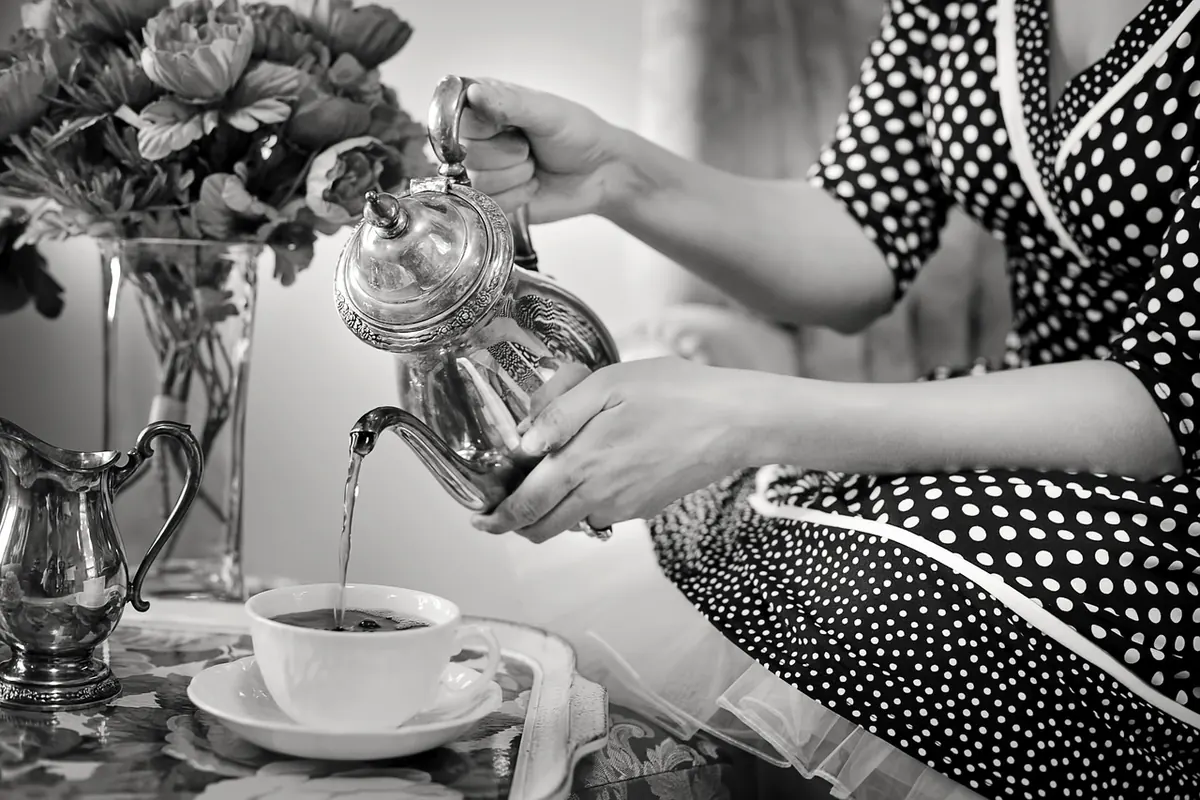
Photo: JillWellington / Pixabay
Eight Cornish bakeries and tea rooms worth building a road trip around, with what to order, when to arrive, and how...
We baked six widely available scone mixes side by side, scoring rise, texture, flavour and value — and noting which...
October 11, 2026 - Reviews
October 10, 2026 - Recipes
Copyright © 2026 Scone Bulletin. All Right Reserved.